L1 training
Advanced Engine Performance Specialist
Build a strategy: verify, read data, then pick the pinpoint test that splits the possible causes.
A diagnostic strategy saves the most time
Verify the complaint and the conditions it happens in. Check codes, freeze frame data and service information. Use scan data to narrow the system, then a pinpoint test to prove the fault. On a composite vehicle case, find the circuit or specification in the reference book before judging any measurement.
A lab scope shows what a meter averages away
A digital meter averages a changing signal. A scope draws voltage over time, so it shows dropouts, slow switching and noise. Compare crankshaft and camshaft signals for correlation, an injector’s current ramp for coil condition, and an oxygen sensor’s switching rate and range.
Five-gas analysis reads combustion
High HC means unburned fuel, such as from a misfire. High CO means a rich mixture. High NOx comes from high combustion temperature, such as a lean condition or an EGR fault. High O2 with high HC points to a misfire or a lean condition; high CO2 with low O2 indicates efficient combustion. Read the gases together rather than one at a time.
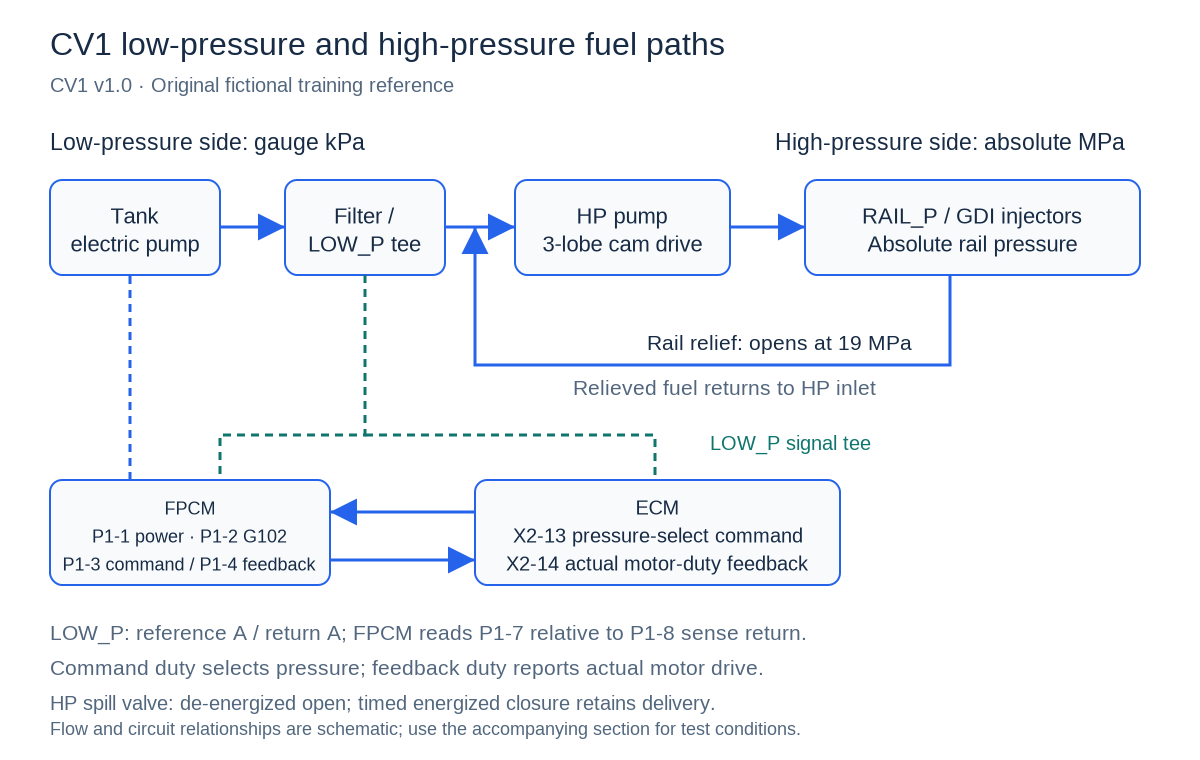
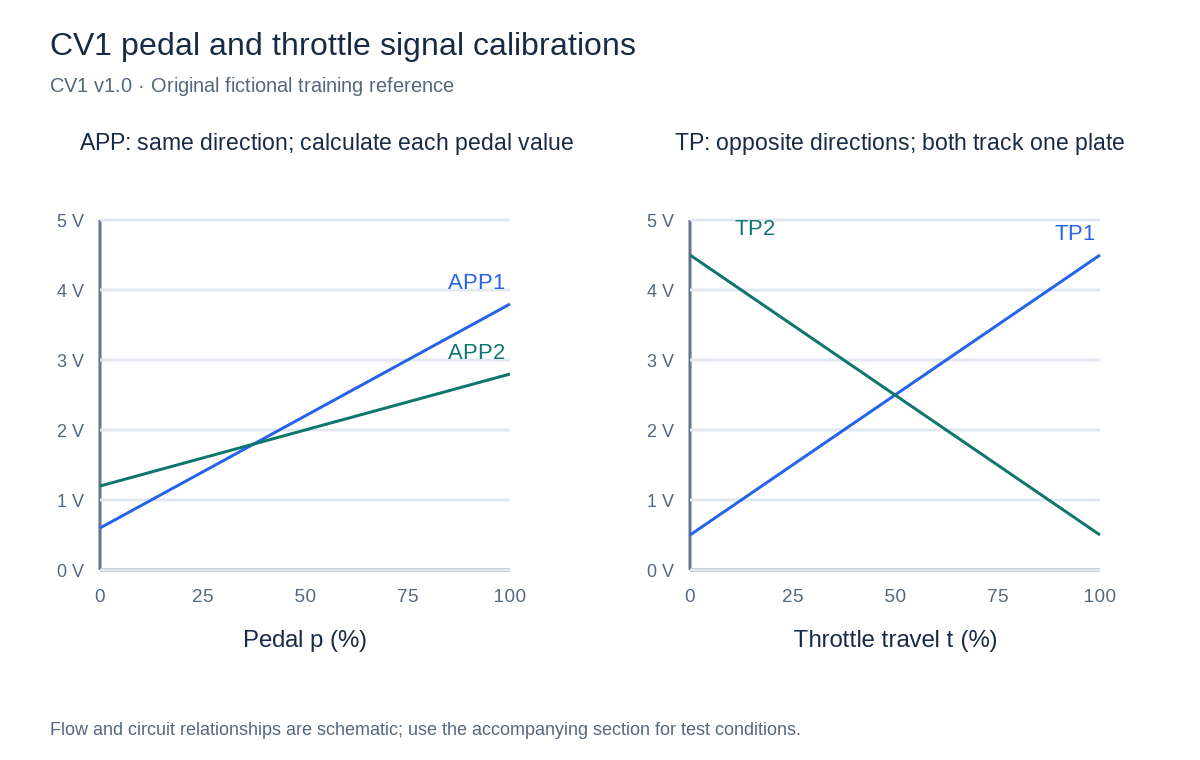
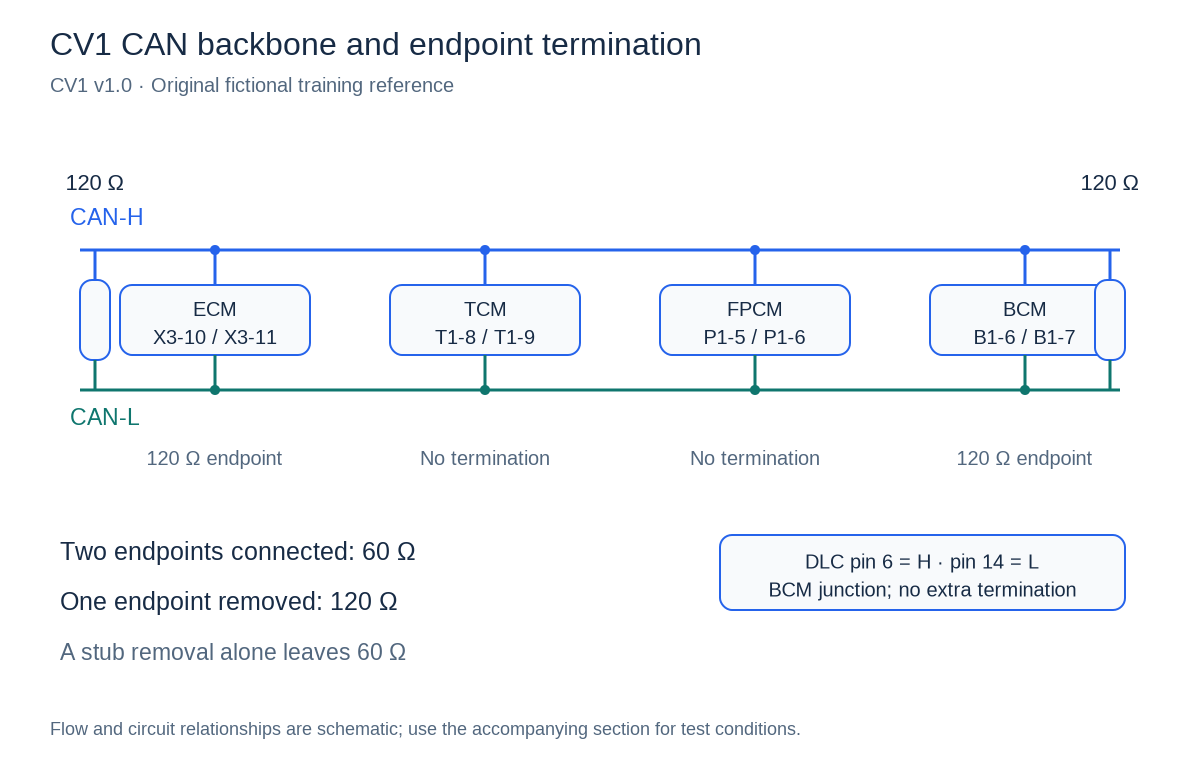
Diagrams from the L1 vehicle book
Practice reading these before a case. Open the full book for every system, circuit and specification.
Traps that cost points
- Using specifications from a vehicle you know instead of the case’s reference book.
- Reading a single exhaust gas in isolation.
- Choosing a repair before a test has proved the fault.